
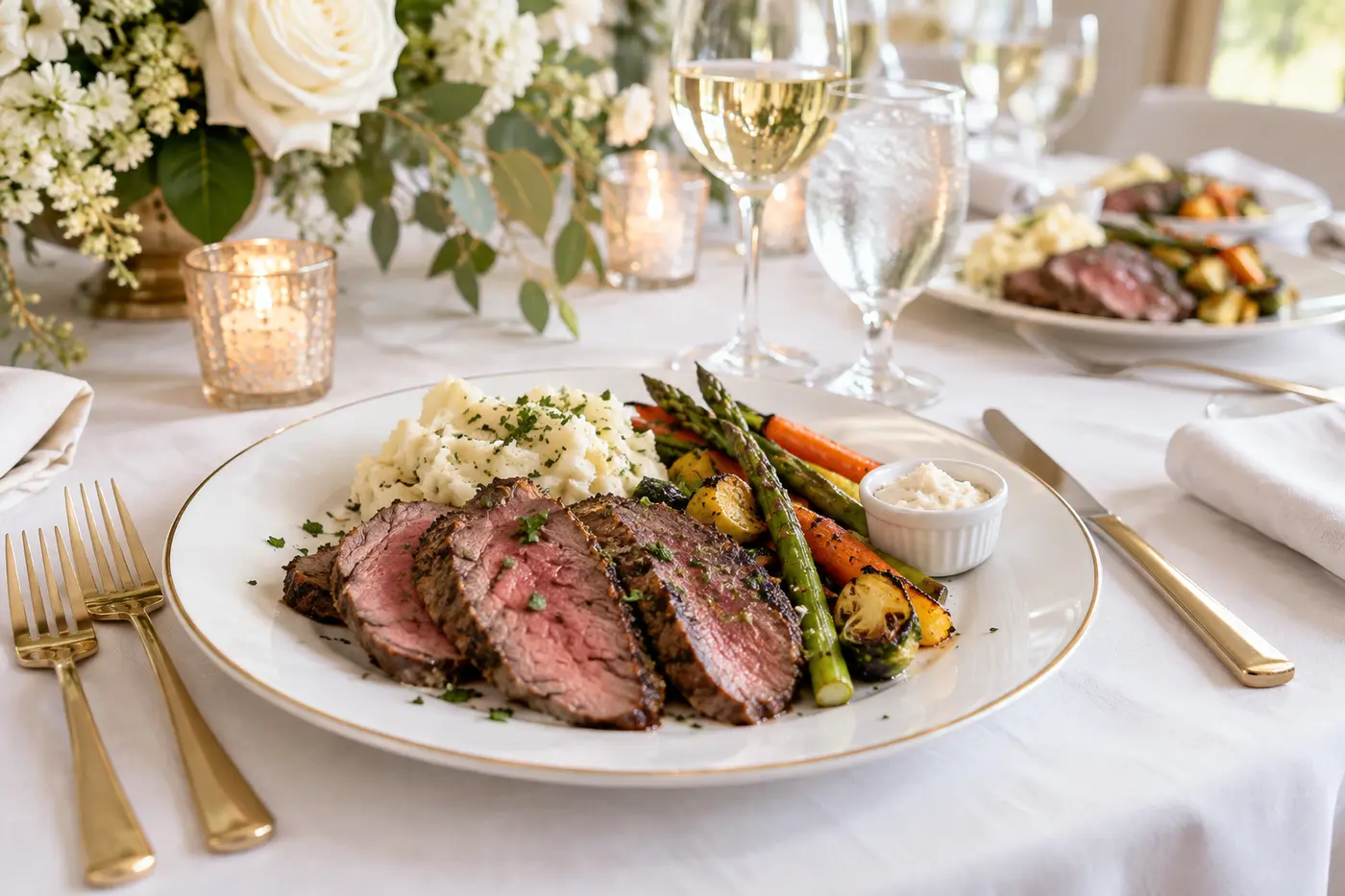
The best wedding dinner format is not simply the most formal or the least expensive. It is the one that works with your venue, guest list, menu, and schedule. A beautifully presented buffet can feel every bit as intentional as a plated meal, while plated service can bring calm structure to a formal reception.
When a buffet works especially well
Buffets give guests more freedom. They can see the selections, choose the portions and sides they prefer, and often try more than one dish. This style works well for varied menus, relaxed celebrations, and events where generous choice is part of the experience.
The strongest buffets are planned around flow. The room needs enough space for the buffet itself, plates, serving utensils, and guests waiting comfortably. For a larger group, your caterer may recommend opening tables in stages or using two-sided service.
Buffet advantages
- More choice for guests
- Easy way to offer several entrées and sides
- A warm, social atmosphere
- Flexible portions for different appetites
When plated service is a natural fit
Plated dinners create a more structured rhythm. Guests remain seated while courses arrive, which can suit formal venues, speeches between courses, or couples who want dinner to feel like a restaurant experience.
This format requires careful coordination. Entrée selections, dietary meals, seating assignments, kitchen timing, and the service team all need to work together. The venue must also provide enough staging space for plates to be finished and delivered efficiently.
Plated dinner advantages
- A refined, orderly guest experience
- Consistent presentation and portions
- Less guest movement during dinner
- A natural fit for a course-by-course timeline
Questions that usually reveal the answer
- Does the venue have room for a well-designed buffet line?
- Will many guests need mobility assistance?
- Do you want multiple entrée choices without collecting selections in advance?
- How formal do you want dinner to feel?
- Are speeches planned during the meal?
- What kitchen and staging space is available?
There is a third option
Family-style dining places shared platters or bowls at each table. It feels welcoming and communal, but it requires table space and its own service plan. Cocktail-style service can also work for receptions built around mingling rather than a seated meal.
Choose the experience first
Start with how you want guests to feel: relaxed and free to choose, formally served, or gathered around shared dishes. Then confirm that the venue, schedule, and menu support that experience. We can help you compare the options as part of your catering plan.
Explore our wedding catering service and tell us about your wedding.